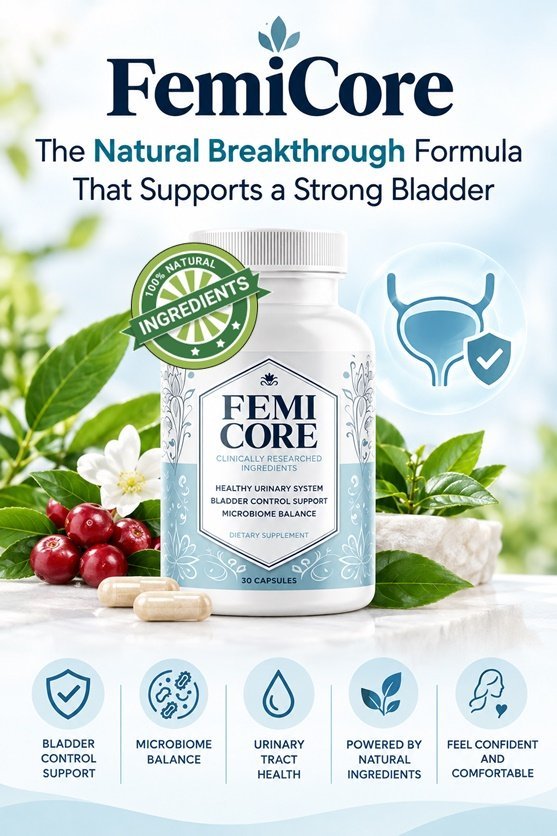
Key takeaways
- There are no published clinical trials on FemiCore as a finished product, so any claim of proven results goes beyond the evidence.
- Cranberry PACs have the strongest research behind them; the probiotic strains show promise, mostly for vaginal health.
- People with occasional, mild urgency and no underlying condition are the most realistic audience.
- Give it a fair, consistent trial of around 8 to 12 weeks, track your symptoms, and use the refund window if it isn't helping.
The Honest Answer
FemiCore might help some women with mild bladder discomfort or urgency, particularly where changes in the vaginal and urinary microbiome play a role. But nobody can say how well it works, because it hasn't been tested as a finished product in published research. The case for it rests on studies of its individual ingredients.
That's not unusual. Very few supplements are tested as complete formulas. It does mean you should be skeptical of any site promising specific results, such as "no more leaks in 3 weeks". For an overview of the product, our FemiCore review is a good starting point.
How FemiCore Is Supposed to Work
The formula is built on three ideas:
- Supporting healthy flora. Five Lactobacillus strains aim to support the balance of bacteria in the vaginal and urinary tract.
- Supporting the urinary tract lining. Cranberry PACs and bearberry have a research and traditional history in urinary health.
- Supporting bladder comfort. Berberine has been studied for effects on bladder muscle activity, mainly in the lab.
Our FemiCore ingredients guide explains each one in detail.
What the Research Says, Ingredient by Ingredient
| Ingredient | What research suggests | Main limitation |
|---|---|---|
| Cranberry PACs | May reduce the risk of recurrent urinary issues in some women | Results depend on dose and product type |
| L. crispatus | Associated with a healthy, stable vaginal microbiome | Strongest data is for vaginal, not oral, use |
| Other Lactobacillus strains | Support gut flora; some vaginal-health data | Benefits are strain-specific |
| Bearberry | Traditional use for short-term urinary comfort | Limited modern trials; short-term use only |
| Berberine | Lab and animal studies on bladder muscle activity | Little human data for bladder symptoms |
| Mimosa pudica | Traditional digestive use | Research is preliminary |
The strongest piece of evidence: cranberry
Cranberry is the most studied ingredient in the formula. Large research reviews have found that cranberry products may lower the chance of recurrent urinary issues in some groups, including women who have had them before. However, the benefit depends heavily on getting enough PACs. Because FemiCore's exact PAC content isn't easy to verify, we can't say whether it matches the amounts used in studies.
The most interesting idea: the urinary microbiome
Researchers now know urine isn't sterile and that a healthy urinary tract has its own bacteria, often dominated by Lactobacillus. Studies have linked lower levels of protective Lactobacillus with some bladder symptoms. This is a genuinely exciting area, but it is still early. We don't yet know whether taking oral probiotics reliably changes the urinary microbiome in a way that improves symptoms.
The weakest links: berberine and Mimosa pudica
Claims that berberine "regulates" the bladder muscle come mostly from laboratory and animal research. That is a starting point for science, not proof that a capsule will reduce urgency in people.
Who FemiCore Is Most Likely to Help
Based on how the ingredients are thought to work, the most realistic candidates are women who:
- Have occasional, mild urgency or bladder discomfort without a diagnosed condition
- Notice symptoms around hormonal changes, such as perimenopause and menopause
- Want to support vaginal flora after a course of antibiotics, with their doctor's agreement
- Are willing to take a supplement consistently for two to three months
Who Is Unlikely to See Much Benefit
- Women with stress incontinence (leaks when coughing, sneezing or exercising). This is usually a pelvic floor issue, and pelvic floor muscle training has strong evidence behind it.
- People with an active infection. A urinary tract infection needs medical assessment and often antibiotics.
- People with diagnosed overactive bladder or interstitial cystitis, who need a proper treatment plan.
- Anyone expecting fast results. Probiotics act slowly, if at all.
Why Results Vary So Much
Two people can take the same supplement and have completely different experiences. Your starting microbiome, hormones, age, fluid intake, caffeine and alcohol habits, pelvic floor strength and any medications all play a part. The natural ups and downs of bladder symptoms also make it easy to credit a supplement for an improvement that would have happened anyway, or to give up on one during a bad week.
This is also why individual testimonials are a poor guide. We explain how to read them critically in our FemiCore customer reviews analysis.
How to Judge Whether It's Working for You
- Keep a simple bladder diary for a week before you start. Note bathroom trips, urgent moments, leaks and nighttime waking.
- Take it consistently as described in our how to take FemiCore guide.
- Repeat the diary at weeks 4 and 8. Compare the numbers rather than relying on memory.
- Keep other habits steady so you can tell what's making the difference.
- Decide before day 60. If nothing has changed, the refund window gives you a way out.
Better Together: Habits That Support Bladder Health
Whether or not you take FemiCore, a few habits have good evidence for bladder comfort: pelvic floor exercises, steady fluid intake through the day, cutting back on caffeine, alcohol and fizzy drinks, avoiding constipation, and not rushing when you empty your bladder. A supplement works best, if at all, alongside these basics.
When to See a Doctor Instead
A supplement is never the right first step for new or worsening bladder symptoms. Book an appointment if you notice burning when you urinate, blood in your urine, fever or back pain, a sudden change in how often you need to go, leaks that are getting worse, or pain in your pelvis. A doctor can check for infection, rule out other causes and refer you to a pelvic health physiotherapist if needed. Many women are surprised by how much a few sessions of guided pelvic floor training can help, and it pairs well with any supplement you decide to try.
Our Verdict
FemiCore is a thoughtfully designed formula built on some promising science, especially cranberry and the emerging research on the urinary microbiome. It is not a proven treatment, and marketing that suggests otherwise goes too far. If your symptoms are mild, you've ruled out medical causes with a doctor, and you're comfortable using the refund window if needed, it's a reasonable thing to try with realistic expectations.
Does FemiCore Work? FAQ
How long does FemiCore take to work?
There's no guaranteed timeline. Because probiotics work slowly, most guidance suggests taking it consistently for at least 8 to 12 weeks before judging whether it has helped.
Is FemiCore clinically proven?
No. The individual ingredients have been studied, but we could not find any published clinical trial on FemiCore itself.
Can FemiCore stop bladder leaks?
It is designed to support bladder comfort, not to treat incontinence. Leaks often have physical causes, such as weak pelvic floor muscles, that respond best to pelvic floor exercises or medical treatment.
What if FemiCore doesn't work for me?
Orders come with a 60-day refund window through the payment processor. Keep your receipt and request a refund within that period if you're not satisfied.